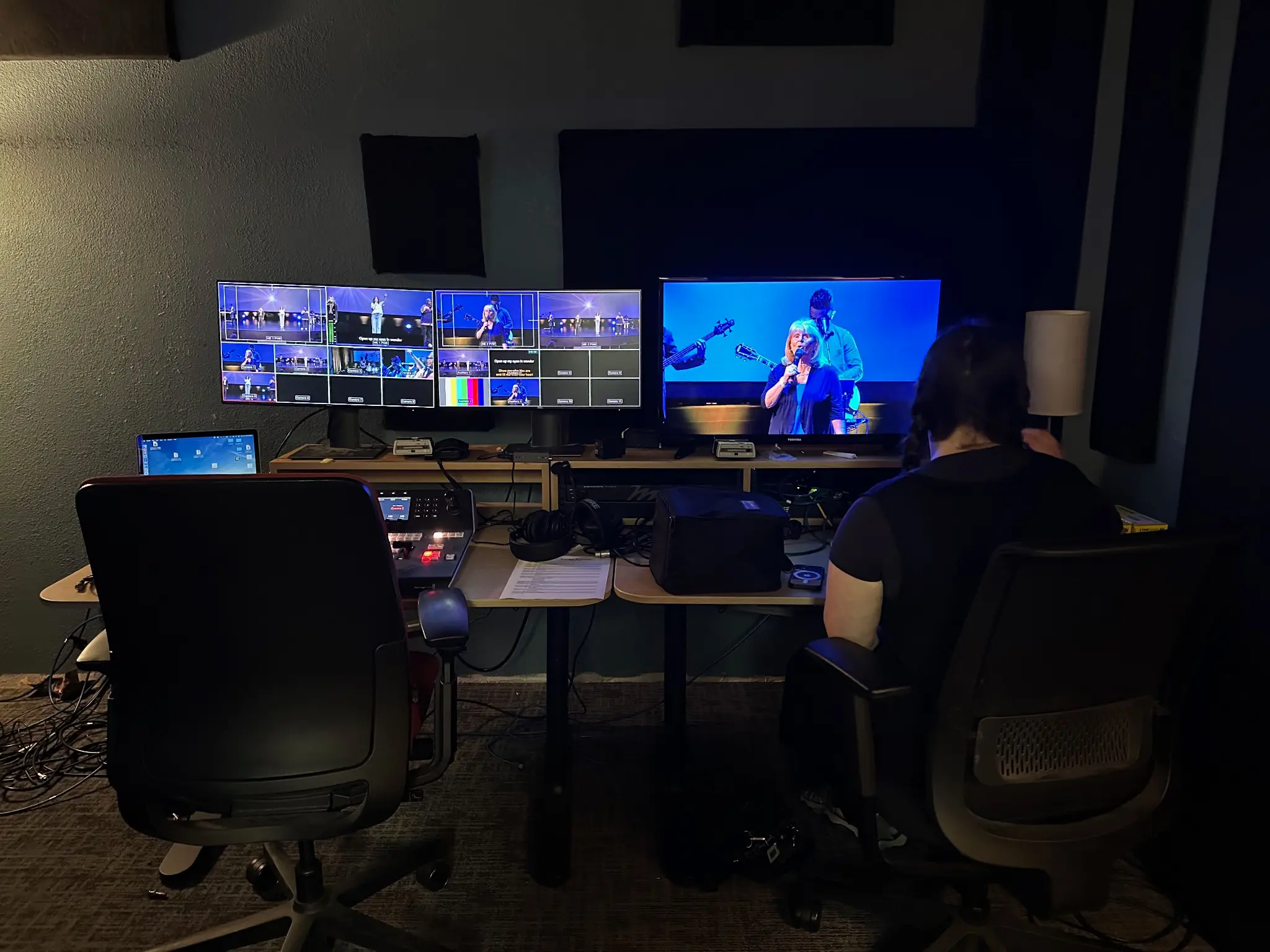
When your AVL system is designed around one 'expert' volunteer, it can quietly become a liability. A single absence on Sunday morning can send your entire production into chaos. Here's how to build systems that empower everyone on your team.
Every church has one. The volunteer who knows exactly how to make the system work — the one person who understands why the audio cuts out on input 7, why the projector takes three minutes to warm up, and where the "secret" button is on the lighting console.
We call this the "Ghost Tech" problem. And if your church has one, you're one absence away from a very difficult Sunday morning.
How the Ghost Tech Problem Develops
It usually starts innocently. A tech-savvy volunteer steps up, learns the system, and becomes the go-to person. Over time, the system gets customized around their knowledge and preferences. Workarounds accumulate. Documentation never gets written. Other volunteers feel intimidated and step back.
The result: a system that only one person can operate confidently, and a team that's dependent on that single point of failure.
The Signs You Have a Ghost Tech Problem
- Other volunteers say "I'll just wait for [Name] to get here" before touching anything
- There's no written documentation for basic operations
- The system has unexplained quirks that "only [Name] knows how to handle"
- Sunday morning stress spikes whenever your key volunteer is absent
- New volunteers give up after a few weeks because the learning curve is too steep
How to Fix It: Design for the Whole Team
1. Simplify the Signal Chain
Every unnecessary complexity in your signal chain is a potential point of failure and a barrier to new volunteers. Audit your system and eliminate anything that doesn't serve a clear purpose. If a piece of gear requires specialized knowledge to operate, ask whether it's truly necessary.
2. Build in Presets and Scenes
Modern audio consoles, lighting controllers, and video switchers all support scene recall. Build presets for your standard service formats — worship, sermon, special events — so volunteers can operate confidently by recalling a scene rather than building from scratch every week.
3. Create Visual Documentation
A one-page laminated "Sunday Morning Startup Guide" posted at each station is worth more than any training session. Include photos, numbered steps, and troubleshooting tips for the most common issues. Make it so simple that a first-time volunteer can follow it without help.
4. Invest in Training, Not Just Equipment
The best AVL system in the world is only as good as the team operating it. Budget for regular volunteer training, not just equipment upgrades. A well-trained team on a modest system will always outperform an untrained team on premium gear.
5. Design for Redundancy
Build your system so that if one component fails or one volunteer doesn't show up, the service can still happen. This means backup plans, spare cables, and at least two volunteers trained on every critical station.
The Bottom Line
Great AVL systems are designed for the people who use them, not just for the people who install them. At Shepherd Multimedia, we design systems with your volunteer team in mind — intuitive, documented, and built to empower everyone on your crew.
Ready to audit your current system? Let's talk.