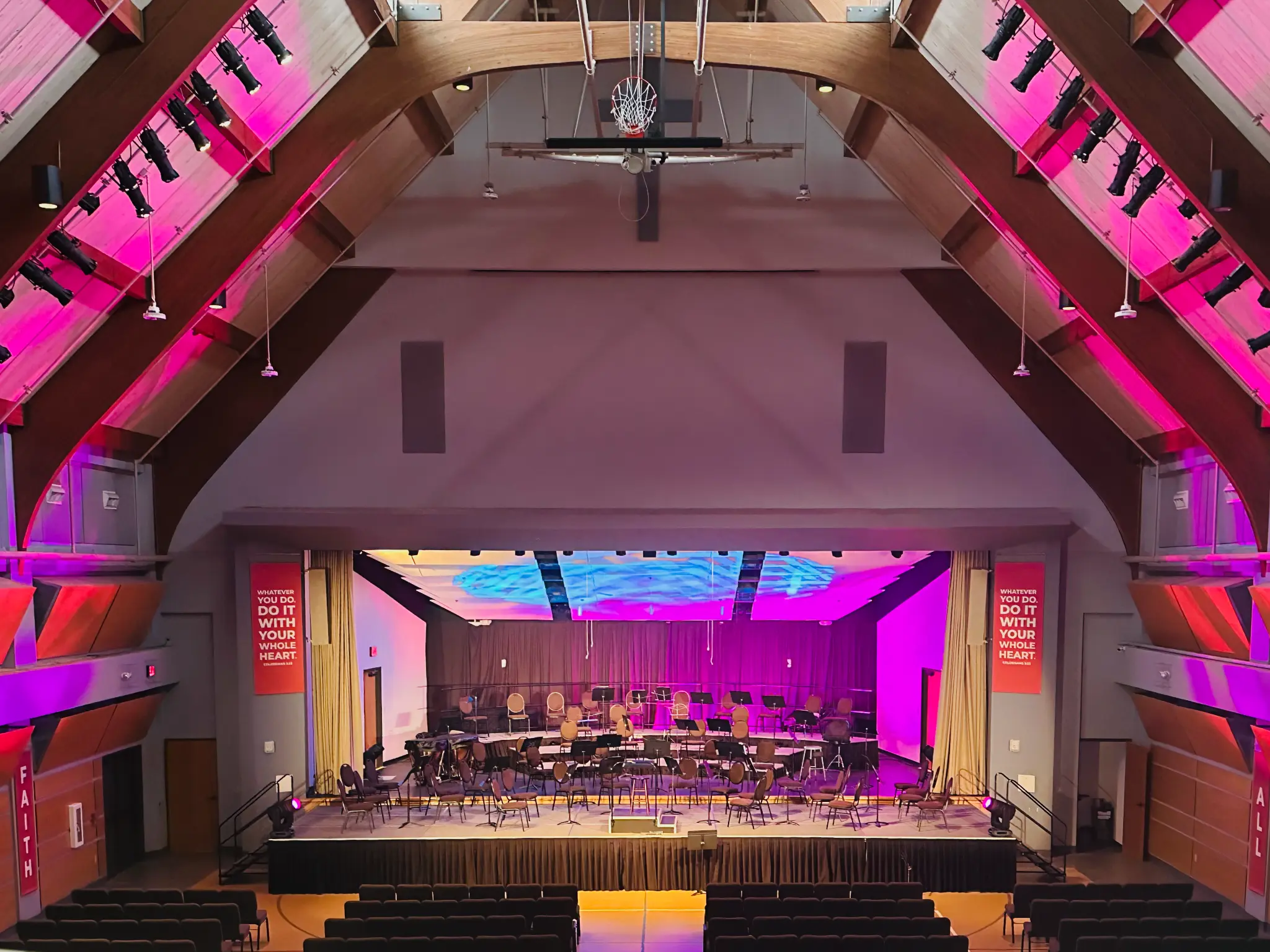
If you've spent any time researching lighting upgrades for your church, you've probably found yourself staring at two very different price tags and wondering if moving heads are really worth it. Here's the honest breakdown.
If you've spent any time researching lighting upgrades for your church, you've probably found yourself staring at two very different price tags and wondering: are moving heads really worth it, or are static lights the smarter investment?
The honest answer: it depends on what you're trying to accomplish. Here's the breakdown.
What Are Moving Heads?
Moving head fixtures (also called "movers" or "intelligent lights") are motorized luminaires that can pan, tilt, change color, adjust beam size, and create effects — all under DMX control from your lighting console. They're the fixtures you see sweeping across stages at concerts and large-scale productions.
Advantages of Moving Heads:
- One fixture can do the job of many static lights
- Dynamic movement creates energy and visual interest
- Color mixing eliminates the need for gel changes
- Can be repositioned for different service formats without physically moving
- Beam, wash, and spot modes in a single fixture (hybrid movers)
Disadvantages:
- Significantly higher cost per fixture ($800–$4,000+)
- More complex to program and operate
- More moving parts = more potential maintenance
- Overkill for simple, traditional worship environments
What Are Static Lights?
Static fixtures stay in a fixed position. This includes PAR cans, ellipsoidals, Fresnels, and LED wash bars. They're simpler, more reliable, and significantly less expensive — but they can't move or change position during a service.
Advantages of Static Lights:
- Lower cost — more fixtures per dollar
- Simpler to operate — great for volunteer teams
- Highly reliable with minimal maintenance
- Excellent for consistent, predictable coverage
Disadvantages:
- No dynamic movement or repositioning
- Multiple fixtures needed to cover different areas
- Less visual impact for high-energy worship environments
The Real Question: What Does Your Worship Environment Require?
For a contemporary church with a band, screens, and a production-focused service, a hybrid approach works best: static ellipsoidals for reliable front wash and key lighting, with a handful of moving heads for dynamic effects, color washes, and visual energy during worship.
For a traditional church with a choir and organ, static lights are almost always the right call. The complexity and cost of moving heads isn't justified when your lighting needs are consistent and predictable.
Our Recommendation
Start with a solid static foundation — quality front wash, fill, and backlight — then add moving heads strategically. Four to six well-placed movers can transform a stage without breaking the budget or overwhelming your volunteer operators.
Not sure where to start? Shepherd Multimedia offers free lighting consultations for churches of all sizes. Let's design a system that fits your worship style, your team, and your budget.