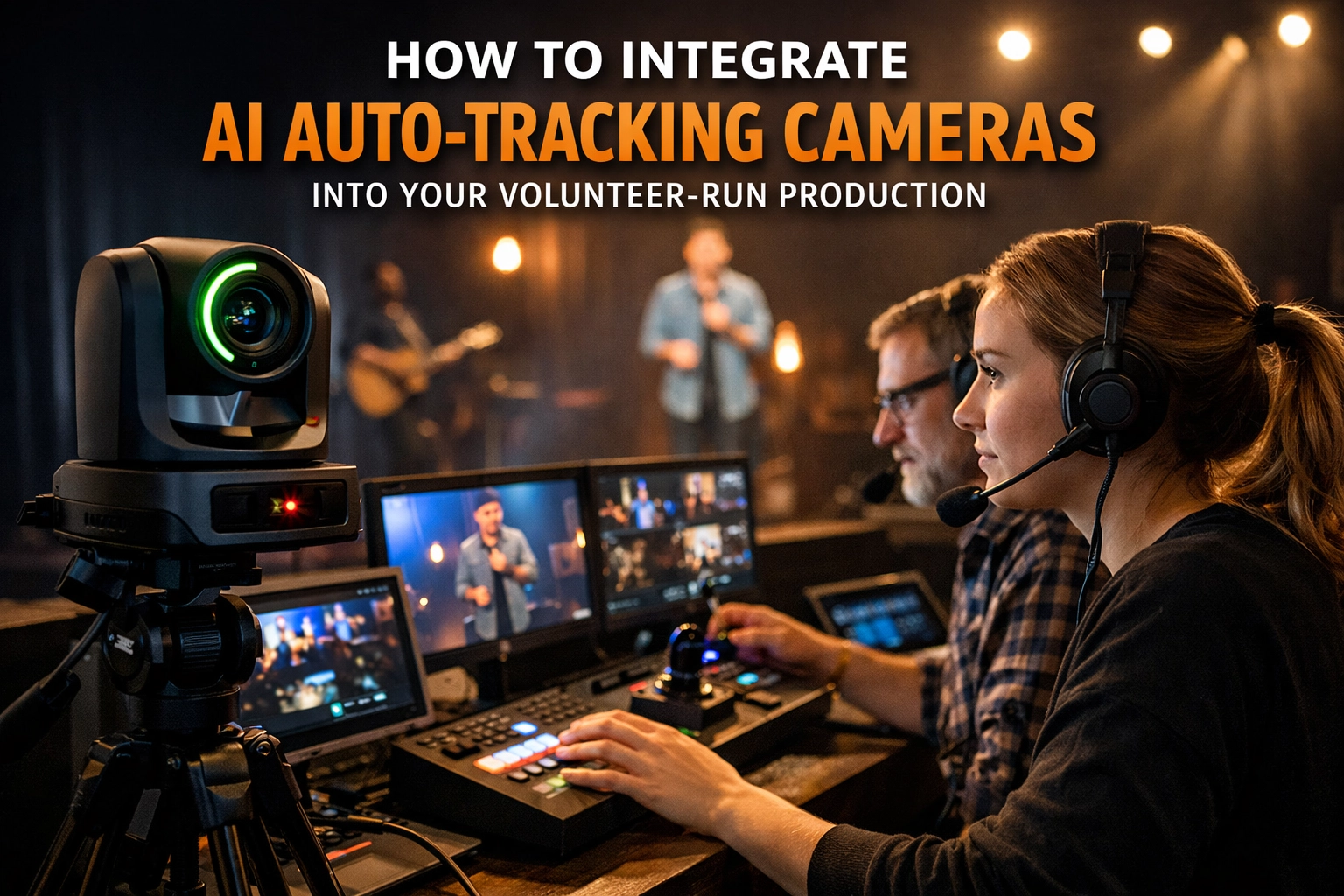

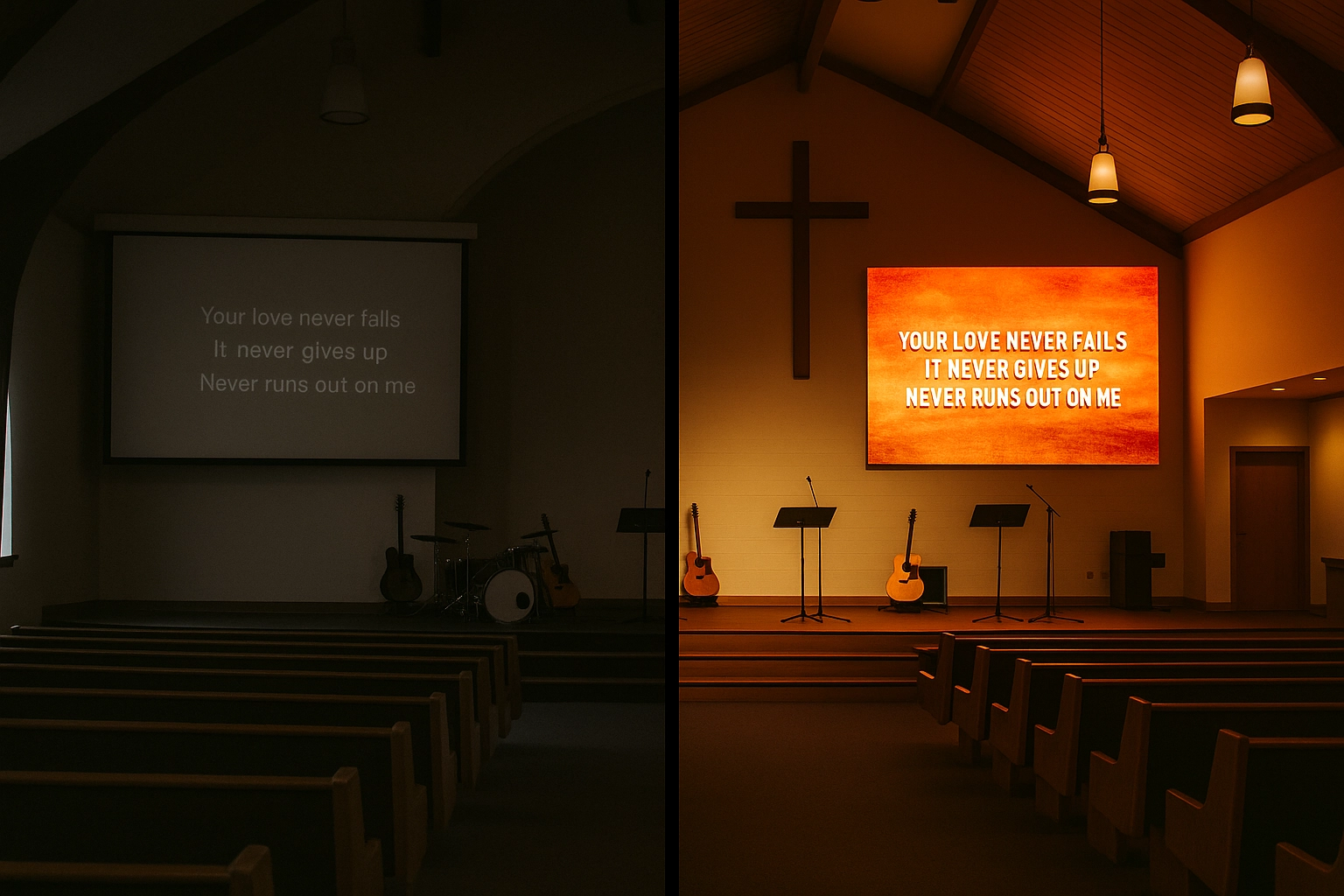
Are you tired of squinting at dim projector screens during Sunday service? Fed up with replacing expensive bulbs every few months? You’re not alone. Churches across the country are making the switch to direct-view LED (dvLED) displays : and for good reason.
Let’s be honest: choosing the right display technology for your church feels overwhelming. Between conflicting vendor recommendations, budget constraints, and technical jargon, many church leaders end up making costly mistakes. But here’s the good news : we’re going to walk you through everything you need to know to make a smart decision.
The Pain Points Every Church Leader Faces
Before we dive into solutions, let’s address the elephant in the room. These are the most common frustrations we hear from church leaders:
“Our projector screen is barely visible during morning services.” Natural light streaming through stained glass windows turns your expensive projector into an expensive paperweight. You’ve tried dimming the sanctuary lights, but that kills the worship atmosphere.
“We’re spending a fortune on bulb replacements.” Those $400 projector bulbs add up fast. Plus, there’s always that dreaded moment when a bulb dies right before the big Easter service.
“The image quality looks amateur compared to what people see at home.” Your congregation watches 4K Netflix on 65-inch screens at home, then comes to church and strains to read pixelated lyrics on a washed-out projection screen.
“We bought expensive equipment that doesn’t work together.” You invested in a high-resolution LED wall, but your video switcher only outputs 720p. Now everything looks blurry, and you’re facing another major expense to fix it.
Sound familiar? Let’s fix these problems once and for all.
Why dvLED is the Game-Changer Your Church Needs
Direct-view LED displays eliminate every single pain point we just mentioned. Here’s what makes them different:
Brightness That Actually Works: dvLED displays maintain vibrant visuals regardless of ambient light. No more choosing between good lighting and screen visibility : you get both.
Zero Maintenance Headaches: Forget about bulb replacements, filter changes, and brightness degradation. Quality dvLED panels run for years without maintenance.
Professional Image Quality: Crystal-clear resolution that rivals what your congregation sees at home and work. Your message deserves to look as good as it sounds.

THE ESSENTIAL SELECTION CRITERIA
Know Your Content Requirements First
Here’s where many churches get it wrong : they pick the display before understanding their content needs. Ask yourself:
- What resolution is your current video equipment outputting?
- Do you plan to show live video feeds, pre-recorded content, or just lyrics?
- Will you display complex graphics and animations?
Pro Tip: If you’re running 720p video equipment with a 4K LED wall, you’re wasting money. Either upgrade your entire signal chain or choose a display that matches your current capabilities.
Measure Your Space Like a Pro
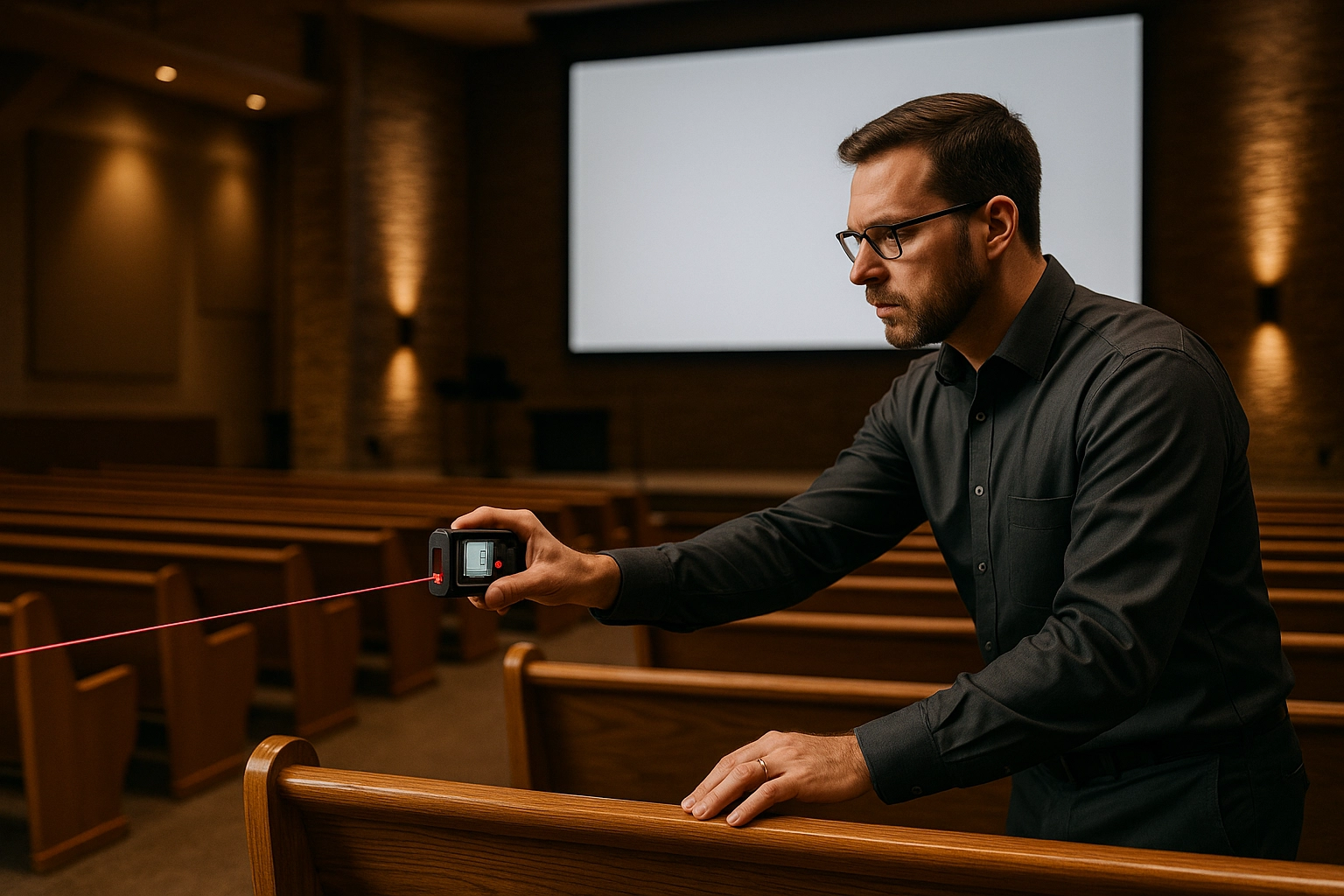
Viewing Distance Determines Everything: The distance from your front row to the screen determines your optimal pixel pitch. Closer viewing requires finer pixel pitches (smaller numbers like 1.2mm), while distant viewing allows larger pixel pitches (3mm or higher).
Quick Reference Guide:
- Front row 8-12 feet away: 1.2-1.5mm pixel pitch
- Front row 15-20 feet away: 2.0-2.5mm pixel pitch
- Front row 25+ feet away: 3.0mm+ pixel pitch
Brightness Requirements: Churches with abundant natural light need displays rated for at least 1,000 nits. Modern LED walls can run at 40% brightness and still outshine any projector at full power.
Size vs. Budget Reality Check
Let’s talk numbers. A 12-foot wide LED wall with 2.5mm pixel pitch typically costs $40,000-$60,000 installed. A comparable projector setup costs $8,000-$15,000 upfront, but factor in $2,000+ annually for bulbs and maintenance.
The 5-Year Math:
- LED Wall: $50,000 total cost
- Projector: $15,000 + ($2,000 × 5 years) = $25,000 total cost
Plus you get superior image quality, reliability, and no ongoing maintenance with LED.
AVOIDING THE BIGGEST MISTAKES
The Resolution Mismatch Disaster
This is the costliest mistake we see. Churches invest $50,000 in a beautiful 4K LED wall, then wonder why everything looks blurry. The culprit? Their video switcher maxes out at 1080p.
The Fix: Audit your entire signal chain before purchasing. Every component from source to screen must support your target resolution.
The “Cheap Pixel Pitch” Trap
Vendors love pushing fine pixel pitches because they’re more expensive. But if your front row is 20 feet away, paying for 1.2mm pixel pitch is literally throwing money away. You’ll get identical image quality with 2.5mm at half the cost.
Ignoring Environmental Factors
That gorgeous LED wall demonstration in the showroom? It’s in a controlled lighting environment. Your sanctuary has stained glass windows, stage lights, and skylights. Factor in your real-world lighting conditions, not ideal lab conditions.
TECHNICAL SPECS THAT ACTUALLY MATTER
Brightness and Contrast
Minimum Requirements:
- Indoor, controlled lighting: 600-800 nits
- Natural light exposure: 1,000-1,500 nits
- Direct sunlight exposure: 2,000+ nits
Contrast Ratio: Look for at least 3,000:1 for crisp text and vibrant colors.
Refresh Rate and Processing
Minimum 60Hz refresh rate prevents flickering during live streaming. Higher refresh rates (120Hz+) are overkill for most church applications unless you’re planning gaming events or sports viewing.
Processing Power: Ensure your LED processor can handle your content complexity. Simple lyrics require less processing than live video with graphics overlays.
BUDGETING FOR SUCCESS
Total Cost of Ownership Breakdown
Initial Investment:
- Display panels: 60-70% of total cost
- Installation and mounting: 15-20%
- Control systems and processors: 10-15%
- Cabling and infrastructure: 5-10%
Ongoing Costs (Annually):
- Electricity: $200-500 (depending on size and usage)
- Insurance adjustment: $100-300
- Professional calibration (optional): $500-1,000
Financing Options That Work
Many churches successfully lease LED displays through equipment financing. Monthly payments of $800-1,200 often cost less than current projector maintenance expenses.
Lease Benefits:
- Preserve capital for other ministry needs
- Include maintenance and support
- Upgrade options after 3-5 years
INSTALLATION AND SUPPORT ESSENTIALS
Why Professional Installation Matters
LED walls aren’t plug-and-play. Professional installation ensures:
- Proper structural support (these displays are heavy!)
- Correct color calibration across all panels
- Integration with existing AV systems
- Warranty protection
Red Flags: Avoid installers who can’t provide church references or don’t carry proper insurance.
Support and Warranty Expectations
Minimum Warranty Standards:
- 3 years on LED modules
- 2 years on control systems
- 1 year on installation labor
Support Response Times:
- Phone support within 4 hours
- On-site service within 24-48 hours for critical issues
MAKING YOUR DECISION
Ready to transform your worship experience? Here’s your action plan:
Step 1: Audit your current AV infrastructure
Step 2: Measure your space and calculate viewing distances
Step 3: Define your content requirements and future needs
Step 4: Get quotes from at least three qualified integrators
Step 5: Visit installations at churches similar to yours
Your congregation deserves technology that enhances worship, not distracts from it. The right dvLED display will serve your ministry faithfully for years while eliminating the ongoing frustrations of outdated projection technology.
Ready to see the difference for yourself? Contact our expert team at Shepherd Multimedia for a consultation tailored to your church’s unique needs. We partner with you every step of the way : from initial planning through installation and beyond.
Lead with expert technical design and support. Your worship experience will never be the same!